
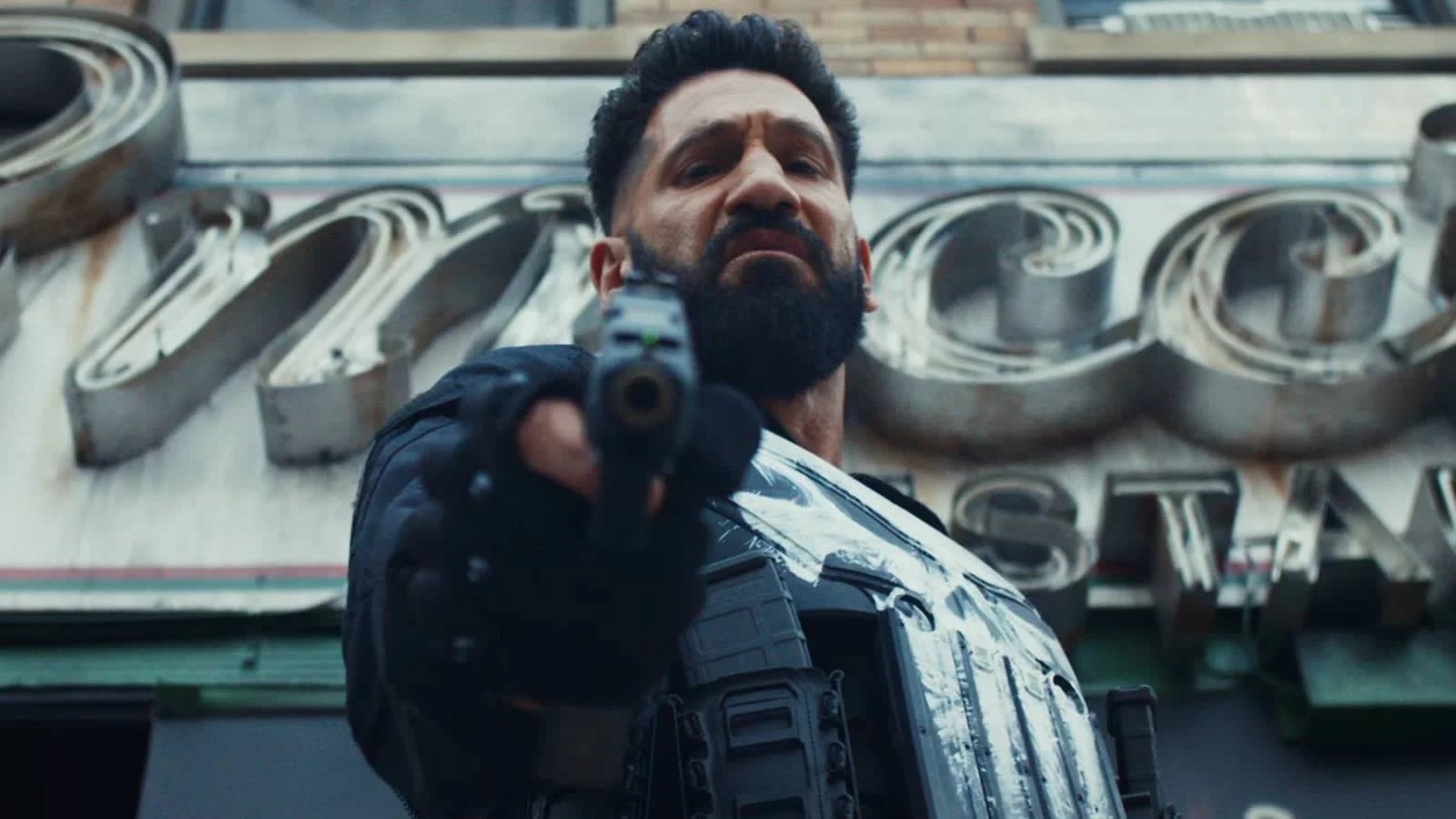
The Punisher: One Last Kill asks what truly comes after revenge for Frank Castle, examining how victory leads to emptiness and questioning whether his pursuit of vengeance offers any real resolution.
The special opens with Frank Castle consumed by depression, rage, and self-loathing. His kill board covers his room, showing how fully the Punisher identity has taken over. When Frank tears it down early, it marks the end of his mission and shifts him from vengeance to uncertainty. The question: what is left for him now?
This emptiness forms the central conflict, shaping Frank’s journey and anchoring the special’s examination of the consequences of revenge.

One of the special’s strongest ideas is that Frank’s actions have consequences beyond the people he kills. After he wipes out the Gnucci family, Little Sicily descends into violence and chaos. The city does not become safer; Frank simply creates a power vacuum. The story repeatedly reinforces that revenge breeds more revenge, until everyone is destroyed by it.
That theme culminates in Ma Gnucci, who serves as a dark mirror to Frank. Judith Light is excellent in the role, bringing both loneliness and cruelty to the character. Her monologue about losing her family reframes Frank’s crusade from another, deeply distorted perspective. In chasing vengeance, Frank has unknowingly created someone very much like himself: a person consumed by grief, isolation, and hatred.
The special argues that Frank Castle’s war fails to heal, instead perpetuating violence and hollowing his sense of purpose.
The cemetery scenes are the special’s strongest. Frank moves from exhaustion to uncertainty, struggling with his purpose. Jon Bernthal delivers one of Frank Castle’s most vulnerable performances as he confronts suicidal thoughts and overwhelming regret.
The special’s visual storytelling is strongest when it tracks Frank’s shifting mindset. Early on, the sounds of city violence blend with helicopters and gunfire, suggesting that he never truly left the battlefield. Violence has become his default state. By the end, however, that chaos finally feels separate from the man himself.
Frank is never presented as triumphant. He is exhausted, haunted, and empty, confronted by the people he’s lost and pushed away, manifestations of humanity he refuses to reclaim.
Ghosts in literature often represent past, present, and future. Frank’s visions reflect these states harshly and confrontationally.
His family and service members represent his past and his struggle to remain both soldier and family man. He is haunted by these failures.

Curtis, now out of uniform, asks what remains when the mission is over. Curtis stands for Frank’s present: empty, directionless, without support.
Karen represents the love Frank refuses. She tells him he has more to do, hinting at a future where Frank acts as a hero, not just an instrument of revenge.
That evolution reaches its climax.
After a relentless, visually striking action sequence reminiscent of The Raid and Dredd, Frank faces a defining choice.
He must choose between pursuing Ma Gnucci for revenge or saving an innocent family caught in the crossfire. For the first time, Frank shifts, moving from vengeance to protection. The distinction is subtle but important: he redirects his rage toward saving others instead of feeding his grief.
That decision gives the ending real emotional weight.
The ending suggests Frank has found a new purpose, redefining his mission to fight for others, not just for family or anger.
While the special delivers a compelling emotional evolution for Frank, it echoes arcs from previous appearances, revealing the need for genuine progression beyond revenge-driven narratives.
Technically, the special excels. Cinematography, editing, stunts, and fight choreography impress. Jon Bernthal’s physical commitment is strong, and Melissa Lawson Cheung’s editing gives the action emotional drive.
I also have to shout out Emily Gunshor, who is, as usual, fantastic with the costume design. This short special has a lot of emphasis put on the outfits, costumes, and uniforms people are wearing, and she always delivers. I also love Frank’s new vest.
That said, the special also strains under the weight of its ambitions.

There are several compelling threads here: Frank’s mental collapse, the cyclical nature of revenge, the moral cost of vigilantism, and his search for purpose beyond vengeance. Unfortunately, the 44-minute runtime does not give those ideas enough room to breathe. Several emotional beats feel rushed or underdeveloped, and parts of the script over-explain themes that the direction and performances already communicate effectively.
Ma Gnucci’s monologue is a good example. Judith Light’s performance already conveys the character’s tragedy and loneliness, but the writing undercuts that subtlety by stating the point too directly. By the time she says, “I am the one doing the punishing now,” the scene has already made that connection clear.
The Punisher: One Last Kill is emotionally ambitious. It understands that beneath brutality is a broken man seeking meaning in violence.
The special may not fully realize all its ideas, but it is thoughtful, visually compelling, and emotionally resonant enough to satisfy, even if it doesn’t satiate.

Leave a Reply