
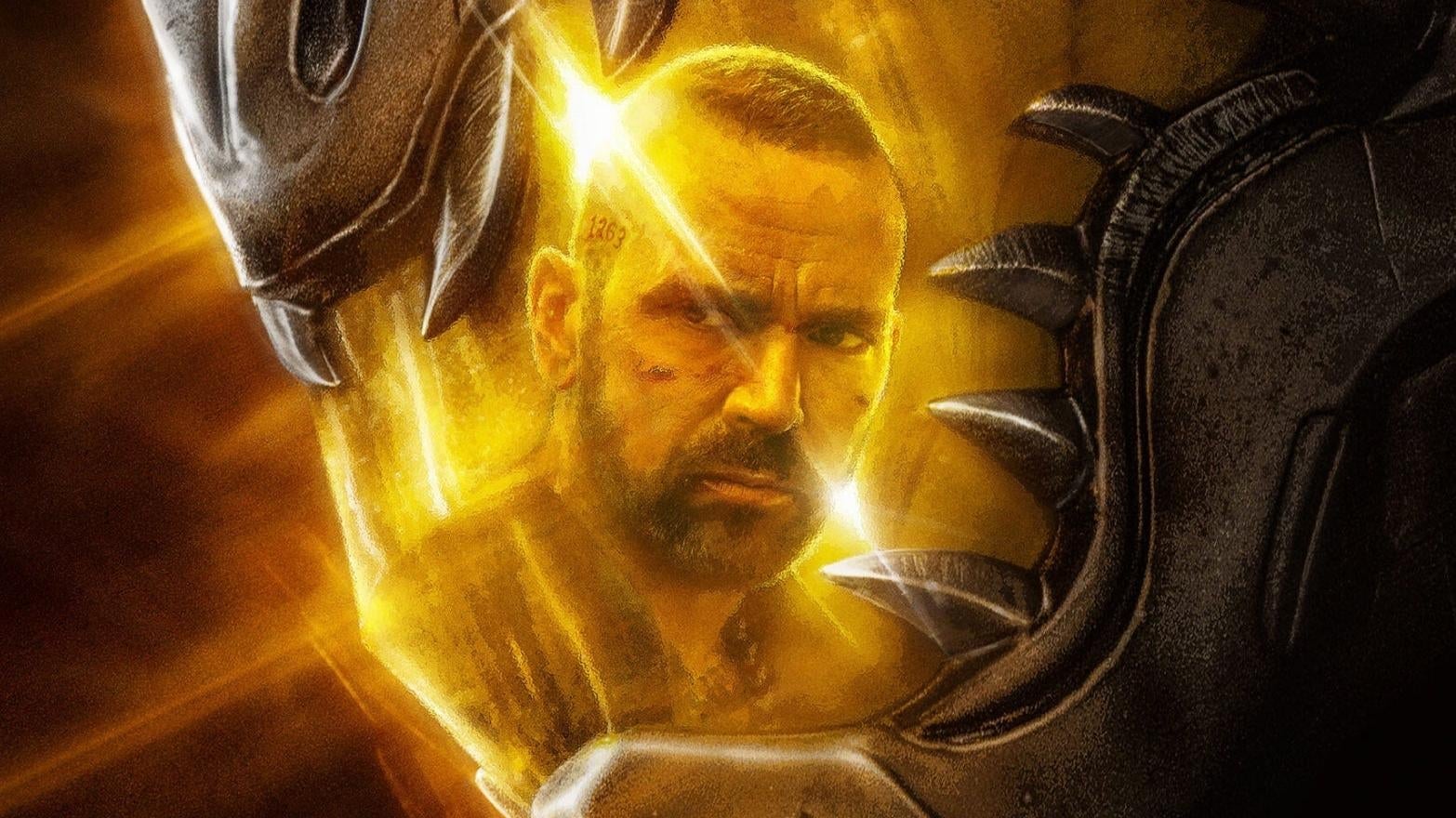
Jason David Frank Deserved a Better Final Film

Before I get into this review, I need to make something clear. Legend of the White Dragon features Jason David Frank’s final film performance and one of the final performances from Michael Madsen, two actors who meant a lot to many people. Jason David Frank in particular was a childhood hero to an entire generation of fans who grew up watching Power Rangers, me included.
If your reason for seeing Legend of the White Dragon is simply because you want to see Jason David Frank one last time, please go see this movie. I genuinely mean that. If watching him put on a suit, throw some kicks, interact with his daughter Jenna, and be a hero one final time gives you some kind of closure, then I implore you to have that experience. There is also a post-credits tribute that, completely removed from my feelings about the actual movie, is worth sitting through if JDF meant something to you.
However, I cannot review the film through that lens. I love Power Rangers, and Jason David Frank played one of the defining heroes of my childhood. However, Legend of the White Dragon was released as a feature film, and I am going to review it as one.
Unfortunately, it is a terrible movie, and what makes that so frustrating is that Jason David Frank is actually quite good in it. In fact, I think JDF gives a performance worthy of a much better movie that Legend of the White Dragon simply does not know how to make.
The Movie Jason David Frank Wanted to Make

The most interesting thing about Legend of the White Dragon is Erik Reed, not the White Dragon. Three years after a catastrophic battle destroys part of Virtuo City and reveals his identity to the world, former superhero Erik Reed is living as a fugitive. His relationship with his wife Rebecca is fractured, he has been separated from his daughter Ashley, his former teammates have moved on without him, and Erik himself seems almost incapable of moving on from the mistakes that destroyed his life.
This is where Jason David Frank shines. There is a sadness behind his performance that I genuinely did not expect. Erik is tired, angry and ashamed. He doesn’t always know how to communicate with the people who still love him, and he carries himself like a man who has spent so much time believing he failed everyone around him that he has forgotten who he was before that failure.
JDF talked before his death about wanting Erik Reed to be completely different from Tommy Oliver. He wanted to play an adult superhero dealing with regret, strained relationships, depression, and the process of rediscovering himself. That intention is visible in his performance, and watching the movie, I kept thinking that there was a version of Legend of the White Dragon that could have been Jason David Frank’s Birdman.
Not literally, obviously, but think about what that could mean: Jason David Frank spent decades being associated with one heroic character. To millions of people, he wasn’t just an actor who played Tommy Oliver. He was the Green Ranger, the White Ranger, and the guy fans grew up idolizing as this larger-than-life superhero. Then here comes Erik Reed, a former superhero who has fallen from grace and is now a complicated and imperfect man struggling with what happens when the heroic identity everyone associates with him is no longer enough.
He is a father dealing with damaged relationships, a man forced to confront his past and figure out who he actually is underneath the suit. That is fascinating material for Jason David Frank, and there is an entire movie there.
Strip away most of the mythology. Strip away the franchise setup. Strip away half the supporting cast. Give me 70 or 80 minutes of Erik Reed trying to repair his relationship with his wife and daughter while slowly deciding whether he can ever be the White Dragon again. Give me Jason David Frank and Michael Madsen sitting across from each other talking. Give me Erik and Rebecca dealing with everything their marriage has survived. Give me Erik trying to reconnect with Ashley.
Then, when he finally puts that White Dragon suit back on, make it mean something.
I would have loved that movie. Unfortunately, Legend of the White Dragon seems almost actively disinterested in being that movie.
A Superhero Movie That Doesn’t Understand Its Own Hero
Instead of focusing on Erik, Legend of the White Dragon desperately wants to convince you that this is the beginning of a massive superhero universe. There are teams, government officials, rebels, police officers, supervillains, mystical crystals, secret histories, flashbacks, technology, assassins, a robot, and an entire mythology surrounding the White Dragon.
The movie keeps adding characters and lore when I am begging it to spend five more minutes with the one character I actually care about, and this becomes the film’s biggest problem. Its scale is completely wrong.
Bat in the Sun has spent years making fan films and Super Power Beat Down videos using established characters, and there is absolutely nothing wrong with that. Those projects demonstrated an impressive ability to take recognizable iconography and create entertaining action on limited resources. But making a collection of cool superhero moments and making a 97-minute narrative feature are two completely different disciplines.
Legend of the White Dragon constantly feels like filmmakers thinking about the universe they want to build instead of the movie they are currently making, and Erik Reed suffers because of it.
I actually watched the movie twice because I thought I had missed something. There are portions of Erik’s story that feel like they simply aren’t there. Characters tell us things about him through exposition that should have been scenes. Relationships are presented as enormously important without the movie taking enough time to actually develop them, while emotional beats arrive before the groundwork has been laid for them.
It isn’t confusing because the story is complicated, but because the storytelling is bad. The movie will spend what feels like forever explaining mythology without meaningfully progressing the narrative, then suddenly blast through five major plot developments before you have processed the first one. It creates this bizarre rhythm where the film is simultaneously dragging its feet and moving way too fast.
Death by a Thousand Little Mistakes

Filmmaking mistakes are scattered throughout Legend of the White Dragon that may seem small individually, but together, they absolutely destroy your ability to believe in the world. Characters move where the plot needs them to move, people know things because the next scene requires them to know those things, and relationships exist because the script says they exist.
The writing is painfully simplistic, and the dialogue consistently fails its actors because almost nobody is given enough actual character to portray. Rachele Brooke Smith and Jason Faunt suffer the most from this. Iris and Connor exist because Erik needs a superhero team. We are told these people have history and the movie desperately wants us to believe they matter to Erik, but it does almost nothing to make us care about them individually. You could remove large portions of their material, if not all, from the film and very little changes emotionally.
Jason David Frank Is Surrounded by Wasted Potential

This makes it even stranger that someone like Cerina Vincent, as Erik’s wife Rebecca, gets comparatively little to do. Vincent is quite good when the movie gives her something. There is an entire emotional history between Erik and Rebecca that feels more compelling than almost every piece of superhero mythology in this film, and the movie barely explores it. Again, I kept thinking about why they weren’t making that movie instead.
Michael Madsen portrays Erik’s father, Max Reed, and his scenes with Jason David Frank have an authenticity that much of the movie desperately lacks. You immediately understand their relationship. There is history between these men, and they feel human together. I wanted so much more of that. Madsen had an incredible ability throughout his career to make dialogue feel lived in, and even here, working with some rough material, he gives the film a presence whenever he’s on screen.

David Ramsey and Mark Dacascos are enjoyable as well, but again, what are we doing with them? They show up, bring some charisma to the movie, and then disappear back into an ensemble that already has far too many characters.
This film desperately needed someone in the screenplay process asking whether Erik Reed needs each of these people in his story, because most of the time, the answer is no.
The Villain Is Catastrophic

Then we get to Dragon Prime. Aaron Schoenke co-directs the movie, co-writes the movie, produces the movie, and plays its main villain, and his performance is easily one of the weakest parts of the entire production.
Dragon Prime should theoretically be fascinating. He is connected to the same power and mythology as Erik, which should allow him to serve as the classic superhero mirror. If Erik represents a man desperately trying to reconcile with his failures and rediscover what being a hero means, Dragon Prime should represent another possible response to that same pain.
Instead, he’s just a guy being evil. Schoenke delivers nearly everything with the same flat affect, making a character the film spends an enormous amount of time attempting to develop feel painfully one note.
It gets worse because the movie keeps returning to him. The more time we spend with Dragon Prime, the less interesting he becomes, until eventually it starts feeling like the movie is actively taking time away from Jason David Frank to give us more of a character that has nowhere near the dramatic weight Erik Reed does. That is an unforgivable trade.
A Movie Without a Visual Identity

This is the easiest way I can explain my issue with the filmmaking: It often feels like the camera is there because the movie needs footage, not because somebody had an idea about where the camera should be. Anything outside the action is mostly photographed in flat, stationary medium shots that make scenes feel like they were captured rather than directed.
There is very little visual storytelling done with Erik despite his character practically begging for it. This is a disgraced former superhero living in isolation, so show me that isolation. Put him at the edge of frames. Separate him visually from his family. Change the camera language when he becomes White Dragon again. Give the visual language some relationship to the story being told.
Instead, conversations are often staged and photographed with the most functional coverage possible, which becomes especially noticeable when the editing and pacing are already struggling.
The film then attempts to manufacture scale through questionable CGI, endless smoke, embers floating through shots, and visual effects that constantly remind you of the production’s limitations. Low-budget filmmaking is not the problem here. Lack of vision is.
Low Budget Isn’t an Excuse
That distinction matters more than ever in 2026. We are in a year where films like Obsession and Backrooms have shown what can happen when filmmakers who developed their skills online are given the opportunity to expand their ideas into feature films.
Those movies aren’t interesting because somebody handed YouTubers expensive cameras. They’re interesting because their filmmakers have a point of view. Backrooms looks like Kane Parsons made it. Obsession looks like Curry Barker made it. Legend of the White Dragon often looks like Bat in the Sun trying to replicate what other movies look like, and there is a difference.
Most art is derivative. Every filmmaker is influenced by something, but influence becomes creativity when you understand what you love about something and reinterpret it through your own perspective. Legend of the White Dragon often stops at imitation.
There are moments desperately trying to capture John Wick, right down to character aesthetics and wardrobe, without understanding the precision that makes those movies work. There are obvious shades of Dragon Ball, Marvel-style humor, Power Rangers, and pieces of seemingly every action and superhero movie the filmmakers have ever watched. At one point, I felt like I was watching Temu John Wick cosplay.
The references themselves aren’t the problem. The problem is that I rarely knew what Legend of the White Dragon itself wanted to be.
Even the Action Doesn’t Save It

The biggest surprise may be the action. If there were one department where I expected Bat in the Sun to absolutely deliver, it was here. This is what they are known for, yet most of the action feels strangely lifeless.
Jason David Frank talked about wanting Erik Reed’s fighting style to feel different from Tommy Oliver’s, incorporating more Muay Thai into the character. There are moments where you can see that physicality come through, particularly because Frank still moves with conviction, but the fights surrounding him rarely create rhythm, tension or character. They just happen.
There’s one fight where Erik is wearing a full motorcycle helmet and essentially no-sells having a cinder block smashed into his head. The choreography frequently feels robotic, while the camerawork and editing rarely find the energy necessary to elevate it.
Mark Dacascos being in this movie only makes the difference more apparent because Dacascos has spent decades understanding how movement reads on camera. When your movie contains this many fights, those fights need to tell me something. How does Erik fight when he’s angry? How does he fight when he’s afraid? How does he fight differently after rediscovering his purpose?

Action should be a character. Instead, Legend of the White Dragon too often treats action as content.
The Sound Isn’t Helping Either
The audio presentation is also rough. ADR is inconsistent, dialogue occasionally feels detached from the image, and there were multiple moments where the score seemed to be fighting with the actors instead of supporting them.
Music should elevate emotion, but here there are scenes where it feels like the score is simply informing me that emotion is occurring while making it harder for me to hear the dialogue delivering that emotion.
These issues compound. Flat cinematography, awkward editing, poor exposition, thin characters, inconsistent sound, weak CGI, and uninteresting action would not completely destroy a movie individually, but together, they make Legend of the White Dragon feel amateurish in a way its ambition cannot hide.
The Power Rangers Problem

Erik Reed isn’t Tommy Oliver. He is darker, angrier, more damaged, and far more complicated than the character Frank spent decades playing. The irony is that while JDF seemed determined to create something new and move forward, the movie around him keeps looking backwards.
The cast is filled with Power Rangers alumni. The costumes deliberately evoke the same kind of iconography, while there are character dynamics, jokes, and superhero imagery that feel designed to remind you of the thing the movie keeps insisting it isn’t.
Some of that is obviously unavoidable. Jason David Frank putting on white-and-gold armor was always going to mean something to Power Rangers fans. But instead of using that history as subtext, the movie sometimes feels like it is chasing the nostalgia.
This is particularly disappointing because Frank’s performance shows that nostalgia wasn’t necessary. He had something else to give us.
The Movie’s Greatest Enemy Is Its Own Ambition
This ultimately brings me back to scale. Legend of the White Dragon wants to be an epic. It wants to launch an IP, introduce a superhero team, establish mythology, tease sequels, stage giant action scenes, and build cinematic-universe lore.
It wants everything, and in trying to be everything, it loses the one thing it actually had: Jason David Frank as Erik Reed.
The movie should have been smaller, shorter and more intimate. Take the money being spent on additional fights, digital environments, smoke effects, and expanding mythology and put it into making Virtuo City feel real. Put it into Erik’s family. Put it into the screenplay. Give these actors actual conversations and give Frank the character study he clearly wanted to make.
Because there is something almost heartbreaking about watching Legend of the White Dragon occasionally stumble into that movie. JDF has a quiet scene and suddenly Erik Reed becomes interesting. He sits opposite Michael Madsen and suddenly I care. He interacts with his real-life daughter Jenna and suddenly the movie has emotional texture. Erik talks about what he has lost and suddenly I can see the film hiding underneath all this noise.
Then somebody punches something and we are right back to generic superhero land.
Final Thoughts

Legend of the White Dragon is not fun B-movie bad. I almost wish it was, because there are bad movies where the ambition, weird choices, and complete lack of restraint become part of their charm. This isn’t that.
This is a film trying desperately to be bigger than it ever needed to be, and that blind ambition becomes its greatest weakness.
The production’s long road to the screen only makes that more frustrating. This project was crowdfunded, failed once, successfully returned, gained additional private investment, went through years of production and post-production, and ultimately asked the fans who financially supported it to wait years to finally see the finished movie.
Was all that time spent making the right movie? Watching the finished product, I don’t think it was.
I don’t begrudge anyone who loves this simply because Jason David Frank is in it. There is a completely separate conversation to have about what seeing him on the big screen one final time means, and I felt that too. But loving the man does not require pretending the movie is good.
If anything, my biggest disappointment comes from believing he deserved better, because Jason David Frank showed up. You can see a complicated man struggling with failure, regret, fatherhood, identity, and whether he can become a hero again after convincing himself he no longer deserves to be one.
You can see an actor who spent most of his life playing one of the most famous children’s superheroes of the 1990s trying to prove he could do something more complicated with that image, and every once in a while, Legend of the White Dragon gets out of his way long enough to let you see it.
Those are the moments that work, and those are the moments I wish the entire movie had been built around.
Jason David Frank spent decades being remembered as a hero. His final film had the opportunity to show us the man underneath one, but Legend of the White Dragon is so concerned with building another superhero that it never realizes the man was always the more interesting story.

Leave a Reply