
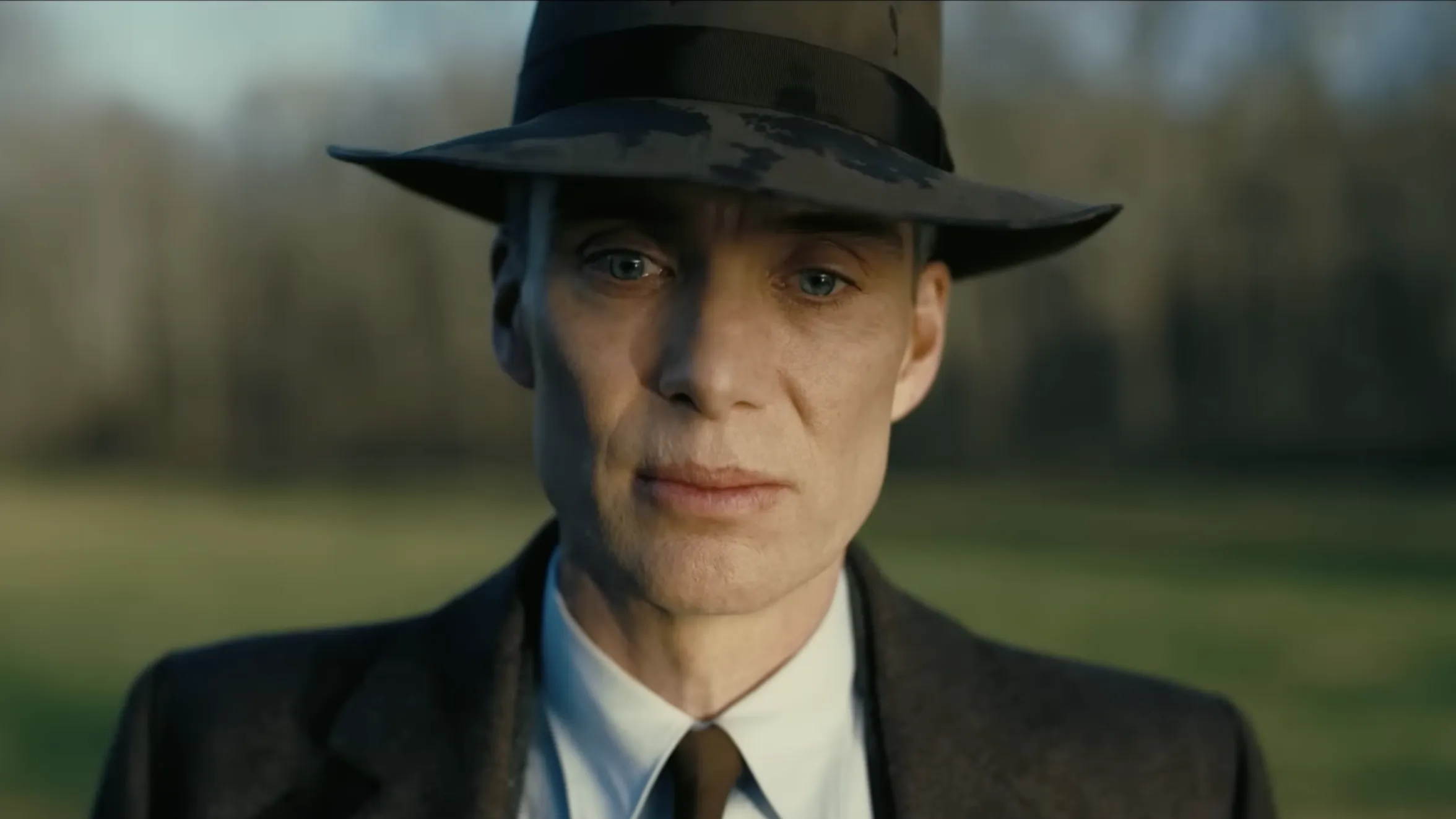
For better or worse, you can never accuse Christopher Nolan of giving less than 100 percent. The biopic format has delivered some truly great works over the course of film history, with scores of them serving as a kind of “Life of a Great Man” story. You know the one: a man defined by one thing he did that cemented himself in history, known for his genius or admirable work ethic while occasionally noting how he was an asshole to those around him, but he’s ultimately excused by history because that one job was just too important.
Oppenheimer, the newest film written and directed by IMAX’s favorite son, provides this kind of story, but it feels like so much more than that. This movie allegedly cost $100 million to produce and runs nearly 3 full hours of smart people talking in rooms to each other. In theory, it doesn’t sound like it would require a budget of that size, but what can you do on theory alone? Nolan has crafted Oppenheimer to feel more massive, immediate, and compelling as any blockbuster audiences have come to expect from studios today.

Nolan never holds your hand as he dives into the deep end of quantum physics, Communist unionizing, and congressional hearings. Luckily, the screenplay mostly functions well enough to keep viewers both engaged and able to follow what’s going on, even if these impenetrable topics are hard to comprehend on their own. I do say mostly, though, as the script is so dense it runs the risk of the viewer getting lost in the technical jargon and sometimes mechanical dialogue, which could force one to have to find their way back while the film chugs on.
The film, about “The Father Of The Atomic Bomb” J. Robert Oppenheimer, plays with the format, in classic Nolan fashion, through a non-chronological structure. Some parts of Oppenheimer’s life are shown in gorgeous color, other sections in monochromatic black and white, all interspersed with beautiful images of everything one could imagine visualized within the chemical reaction of a bomb detonating. There’s a specificity to the rhythm imbued on this epic production that just wouldn’t work without the crew Nolan enlisted here. The whole film is stunning to look at through Hoyte van Hoytema’s immaculate cinematography. This marks their fourth collaboration and it may be their best work yet. The pair understands that movies of this nature can’t rely on a camera to stay stationary while actors recite dialogue; it needs to move to the rhythm of the piece and make what could feel like stage scenes stitched together wholly cinematic. This works especially well thanks to Jennifer Lame’s exceptional editing.

Hans Zimmer may have made waves with the memorable scores he created for many of Nolan’s previous works, but with Tenet and now this it seems Nolan may have found his greatest collaborator in Ludwig Göransson, the Oscar-winning composer of Black Panther. When the score starts, it rarely lets up, providing a propulsive beat that at once excites and exhausts the viewer through Oppenheimer’s work running the Manhattan Project and beyond. He takes what should be a collection of well-spoken scenes of dialogue and turns it into an incendiary political thriller, reminiscent of the paranoia and intensity of projects like Oliver Stone’s JFK. Göransson’s work will undoubtedly reign as some of the best of the year, and between this and Tenet, he may have a new creative partner forcing him to do better than the incredible scores he’s already brought to the screen.
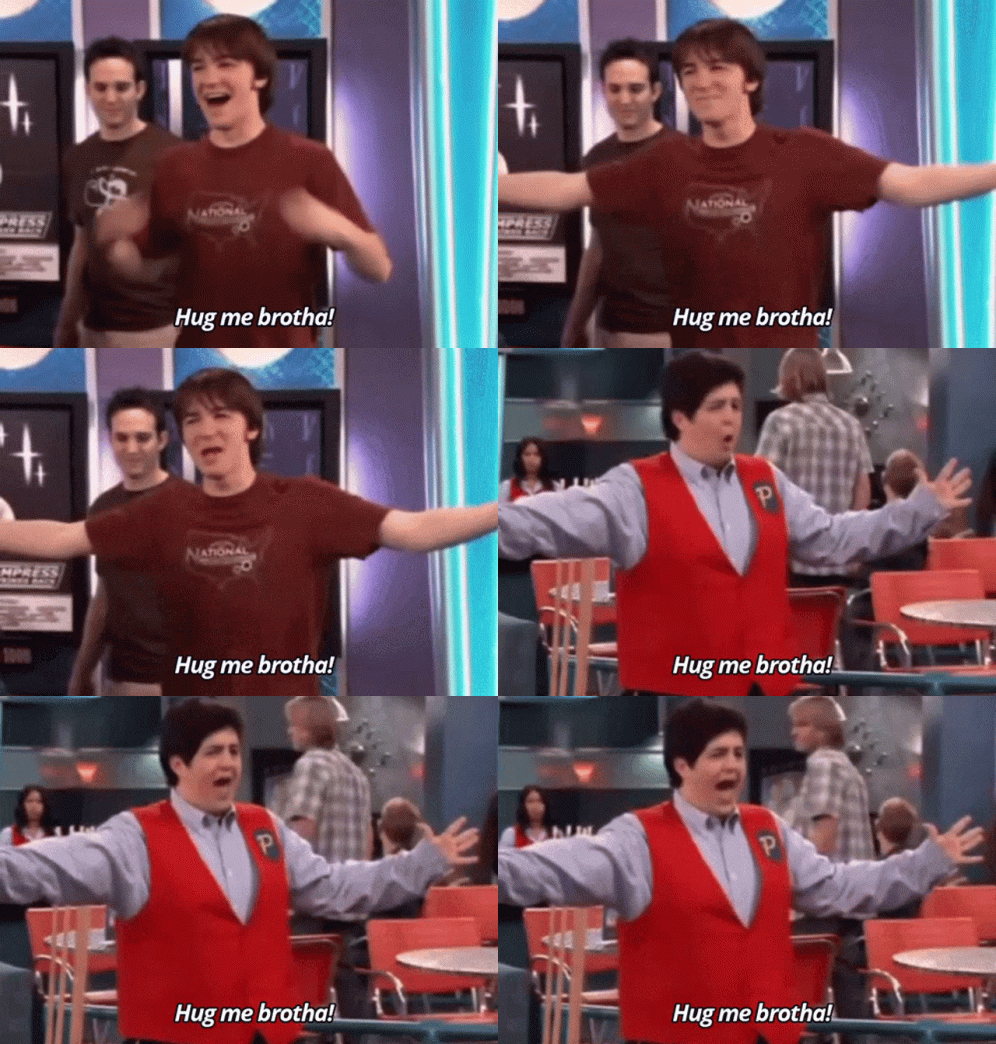
As great of a technical director as Nolan is, he also has a strong grasp of pulling great performances from his cast. And what a cast it is! The number of notable actors that show up for even a brief moment feels like true testament to his reputation, since it’s clear everyone under the sun seems to want to work with him. However, there may be a few too many name actors in bit parts, so it feels slightly distracting. You become totally engrossed and then suddenly there’s a surprise Josh Peck appearance! Before you know it, he vanishes with barely a line of dialogue and you’re still thinking about watching Drake & Josh as a kid. It’s not a big deal when it happens, and it would probably subside on rewatch, but it does take away a bit on initial viewing.

Oppenheimer marks Cillian Murphy’s sixth collaboration with Nolan, and his first anchoring a whole film for him. Murphy demands attention every moment he’s on screen, and the camera absolutely loves his face. His eyes tell so much about his intellect before he ever opens his mouth. He’s astounding here, and hopefully this leads to more larger lead roles for him. Meanwhile, taking a supporting role and teaching a master class on how to run away with a film is ex-Earth’s Mightiest Hero Robert Downey Jr. as Lewis Strauss. We’ve come to expect great work from Downey Jr. thanks to his quick wit and dramatic chops, but here he gives what might be the best performance of his career. He may have been the lead of the biggest blockbuster franchise ever, but he can also be a capital-A Actor if given the right material.
If there’s a weakness to be found in the film, it’s in the depiction of the women in Oppenheimer’s life. While Florence Pugh and Emily Blunt give very strong performances, they fall victim to Nolan’s inability to characterize them beyond their relationships to the men in their lives. In a sea of great performances by what feels like a hundred men, it’s unfortunate the only two women with any substantial amount of dialogue barely feel like real people. Blunt suffers less, since she has much more to do, but nevertheless it’s noticeable.
Outside of this issue, this is probably Nolan’s best screenplay, with everyone’s dialogue firing on all cylinders. It’s too soon to say, but there’s a good argument to be made that Oppenheimer is his greatest achievement yet. It’s ferocious and frightening, as explosive as it is entrancing. Nolan is reckoning with the enormous power we’ve put in our hands to destroy ourselves, using the enormous power he’s cultivated with studios to tell it in the only way he knows how. In theory, making this man’s life into an epic political thriller where there’s still a whole hour of falling action after the bomb blows shouldn’t work as well as it does, but theory will only take you so far.
Be sure to check out our video review with Monty and Nicki here!




Leave a Reply