

How do you stop the sunrise?
The Hunger Games: Sunrise on the Reaping is the most beautiful and arguably the most tragic entry in the franchise. It’s a gorgeous, deeply sad movie about the cost of rebellion and what happens when someone tries to fight back against a system that has spent decades convincing everyone that resistance is pointless.
That’s what I find so interesting about Haymitch Abernathy’s story. We already know who he becomes. We’ve met the cynical, alcoholic mentor who guides Katniss Everdeen through her fight against the Capitol. But there’s an entire life behind that version of Haymitch, and this movie gives us a chance to understand the young man who existed before everything went wrong.
The Boy Before the Broken Man
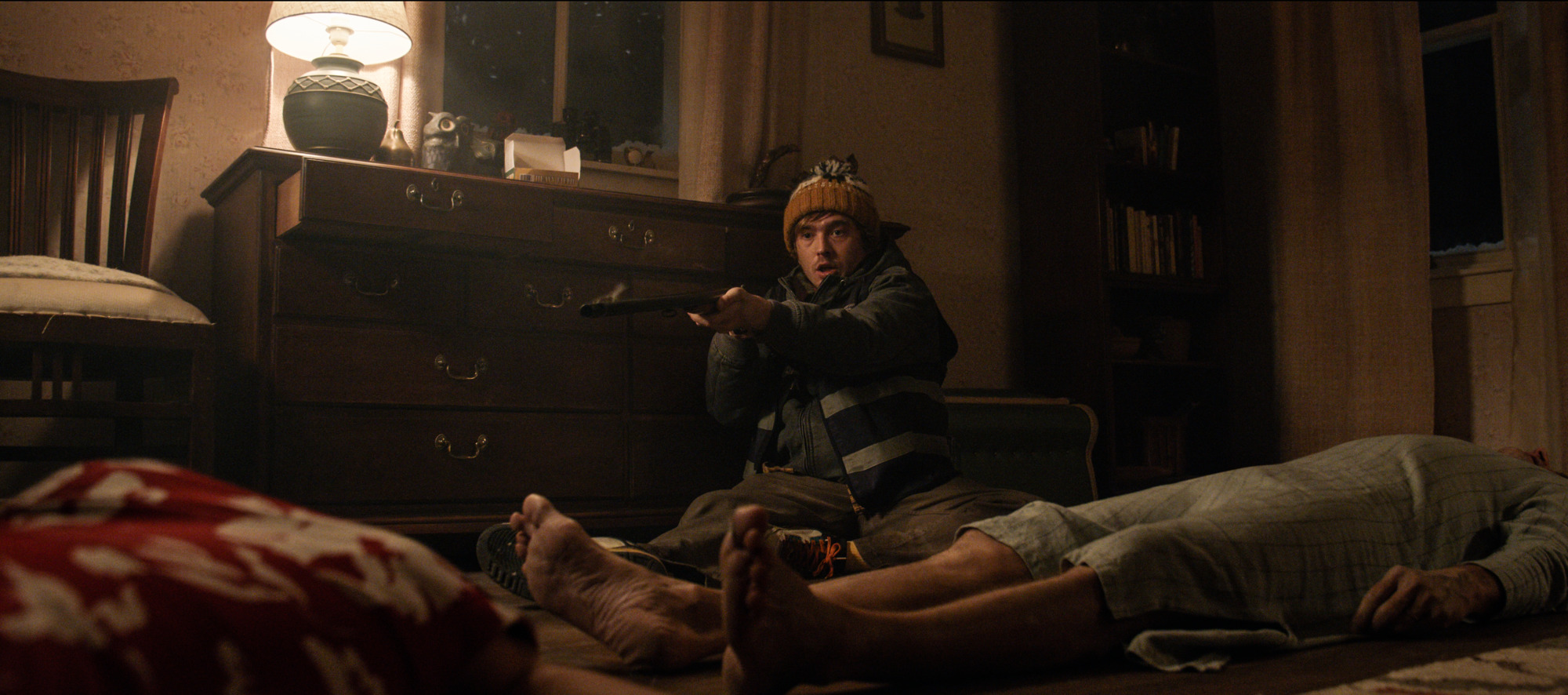
Joseph Zada is tremendous as the young Haymitch. Woody Harrelson is a tough act to follow, especially as one of the franchise’s most beloved characters, but Zada makes Haymitch feel like the character we know while giving him an identity entirely his own.

What impressed me most is how he balances the different sides of Haymitch. There’s the rebellious smartass we recognize from Harrelson’s performance, but there’s also an optimism and vulnerability that makes this version of the character feel so different. He’s still a kid who believes things can be better, even when the world around him has given him very little reason to believe that.

And I think that’s what makes Zada’s performance so heartbreaking. We’re watching someone who hasn’t yet been completely broken by the world, and knowing how much of that optimism he’ll eventually lose makes those moments of hope especially difficult to watch.
The movie is also insanely well cast across the board.
Jesse Plemons is wonderful as Plutarch Heavensbee. You can never quite get a read on the character until he allows you to, and there’s an impressive amount of control in that subtlety. Even knowing where Plutarch’s story eventually leads, I found myself questioning how much he was revealing, what he was keeping to himself, and whether Haymitch should actually trust him.

I also loved Kieran Culkin as Caesar Flickerman. Stanley Tucci is so closely associated with this character that I wasn’t entirely sure what to expect from someone else stepping into the role. But Culkin understands what makes Caesar entertaining while bringing his own personality to him. His performance is distinct from the Tooch’s without ever feeling disconnected from the character we’ve already met.
And then there’s Glenn Close as Drusilla Sickle.
She steals practically every scene she’s in. This is a legend showing up, knowing exactly what she wants to do, and having the time of her life doing it. Drusilla is such an outrageous creation, and it’s remarkable how much personality Close manages to communicate through all that makeup and those elaborate prosthetics. Her physicality, expressions, and general disdain for everyone around her make her one of the film’s most entertaining characters. You can tell she’s having an absolute blast.

I was also really impressed with the younger ensemble. Grace is excellent as Maysilee Donner, while Daggs is incredibly endearing as Ampert. Both bring so much personality to their characters, and I loved how quickly the film got me invested in the larger group of tributes. That isn’t easy when you’re telling a story where the audience already knows the outcome of the Games.

Getting to experience the Second Quarter Quell all the way through was one of the things I enjoyed most about the movie. Spending time with these kids, watching their relationships develop, and seeing the different ways they respond to their circumstances makes the inevitable tragedy feel much more personal. You become attached to characters you know probably aren’t making it out of that arena, and that knowledge makes some of their quieter moments especially difficult to sit through.
A Beautiful World Built on Horror
Visually, I think this is the strongest film in the franchise. The 1970s-inspired aesthetic is absolutely gorgeous, and I love how the filmmakers use the period’s visual identity to create something that feels both retro and distinctly Panem.
I also think the choice of decade is interesting, especially when you consider how much of the popular imagery of the 1970s is associated with youth movements, counterculture, and challenging established authority. There’s a certain optimism to that imagery that feels appropriate for a story about young people beginning to question why the world has to function the way it does.
And the Capitol’s interpretation of that aesthetic is fascinating.

Production designer Uli Hanisch creates a version of retrofuturism that feels remarkably immaculate. A lot of dystopian science fiction uses older design influences to create environments that feel worn down, dirty, or decaying. But that wouldn’t necessarily make sense for the Capitol. This is a society obsessed with appearances, extravagance, and demonstrating its own superiority. Why would its wealthiest citizens tolerate anything less than perfection?

I love how clean and meticulously maintained everything feels. The Capitol looks like a place where every surface has been polished and every detail carefully considered. There’s something especially disturbing about a society that puts so much effort into maintaining its beautiful surroundings while showing so little concern for the lives of the people it exploits.
The costume design is another tremendous highlight. Bina Daigeler’s colorful tribute uniforms, the Peacekeepers’ armor, and the Capitol’s extravagant fashion are some of my favorite designs in the series. There’s so much personality in these costumes, and I particularly appreciate how the tribute uniforms reinforce the idea that these children are being dressed up for a sporting event rather than sent to their deaths.
That contrast becomes even more pronounced when we enter the arena. And my God, the arena is beautiful.

The vibrant greenery, bright sunlight, and fields of flowers create an environment that almost feels inviting. Under different circumstances, it would be the kind of place you’d want to explore. Instead, it’s a landscape designed for the slaughter of children.
It felt reminiscent of Ari Aster’s Midsommar, particularly in the way it uses daylight to create horror. We’re so accustomed to associating frightening imagery with darkness, shadows, and environments where we can’t see what’s coming. Here, everything is brightly illuminated, and the scenery is breathtaking. None of that makes what you’re watching any less horrifying.

If anything, the beauty makes it worse. I actually caught myself admiring the scenery at times, which is a pretty uncomfortable reaction to have when you remember what these kids are being forced to experience.
The spectacle is beautiful because the Capitol wants it to be beautiful. The horror is simply part of the show.
The Cost of Fighting Back
I think that visual approach fits particularly well with the film’s ideas about rebellion. Haymitch has grown up in a world where the Hunger Games are simply a part of life. Every year, the Capitol takes children from the districts, and every year, families are forced to accept it. People have been conditioned to believe that this is simply how the world works, and there’s nothing they can do to change it.

But Haymitch isn’t entirely willing to accept that.
His story examines the consequences of challenging a system long before there’s a realistic chance of defeating it. And I love that the film is willing to explore how devastating those consequences can be.
Because Haymitch doesn’t have the luxury of knowing that Katniss Everdeen will eventually help bring down the Capitol. He doesn’t know whether the people he’s fighting for will ever get to live in a better world. He’s a young man trying to do what he believes is right, and the cost of that decision is enormous.

That’s what makes the film’s examination of rebellion so tragic. We know the Capitol can eventually be defeated, but Haymitch is living through a period when that victory feels practically unimaginable. His resistance might not accomplish everything he hopes it will, but I don’t think that makes it meaningless.
There’s something incredibly admirable about a person who continues to challenge a system even when the consequences of doing so are terrifying. At the same time, the film doesn’t shy away from what that decision can cost, or how much of yourself you can lose in the process.
A World That Feels Too Small
However, as much as I enjoyed the film, I do think its status as a prequel creates some problems.
Sunrise on the Reaping is incredibly fan-service-forward, sometimes to its own detriment. It feels like nearly every character is either a younger version of someone we’ve already met or somehow connected to an established character. And while those connections can be entertaining, they also make the world of Panem feel considerably smaller than it should.

At some point, constantly discovering how everyone is related or connected starts to feel less like organic world-building and more like the franchise is determined to make every character historically significant.

Haymitch occasionally suffers from this as well.
Because he’s such a beloved character, there are moments where you can feel the story working to give him an increasingly important place in the larger history of the rebellion. I understand the desire to make his story meaningful, and for the most part, I think the film succeeds. Zada’s performance and the emotional weight of Haymitch’s journey make those connections feel earned more often than not.

Still, I don’t need every beloved character to have played a pivotal role in everything that came before. Sometimes a character’s personal tragedy is more than enough.
When the Tragedy Lingers
My bigger criticism, though, is the pacing.
The movie is simply too long, and there are stretches where its overwhelming melancholy works against it. I don’t mind a film being depressing, and I certainly don’t expect a story about Haymitch’s Hunger Games to be uplifting. But there are moments where Francis Lawrence allows scenes to linger long after their emotional impact has already landed.

I felt this particularly as Haymitch mourns his fallen comrades. These are genuinely heartbreaking moments, but the film sometimes sits in that sadness for a few beats too long. Instead of making those scenes more devastating, it actually diminishes their impact.
At times, it becomes an exercise in melancholic meandering.
The cast is doing such tremendous work, and there are moments when a look or a brief exchange communicates everything we need to understand. I wish the film trusted those performances enough to move on a little sooner. The tragedy is already there, and the audience is already feeling it. We don’t need to linger on every painful moment to appreciate its significance.

Some of the dialogue also feels unnatural, particularly when the film leans into more conventional YA writing. An exchange between Maysilee and Haymitch on the train stood out to me because it feels like we’re being spoonfed their relationship and its history without having actually seen enough of it to understand where those emotions are coming from. The actors are doing good work, but the writing occasionally asks us to accept emotional beats that haven’t been fully earned. It’s especially noticeable in a movie that’s otherwise so effective at getting us invested in its characters.
Despite those criticisms, I came away genuinely loving Sunrise on the Reaping. It’s a movie that makes me appreciate Haymitch Abernathy in a way I hadn’t before, and I think Joseph Zada deserves an enormous amount of credit for that.
By the time we meet Haymitch in the original Hunger Games, we’ve already seen what years of loss have done to him. He’s cynical, exhausted, and seemingly resigned to a world that has taken practically everything from him. But now we have a better understanding of the person who existed before all that pain, and why there’s still enough of him left to help Katniss fight back.
Which brings me back to that question:
How do you stop the sunrise?
Haymitch couldn’t stop another reaping. He couldn’t change the world simply because he wanted to. But that doesn’t mean he was wrong to try.
And it certainly doesn’t mean he shouldn’t try again.

Leave a Reply